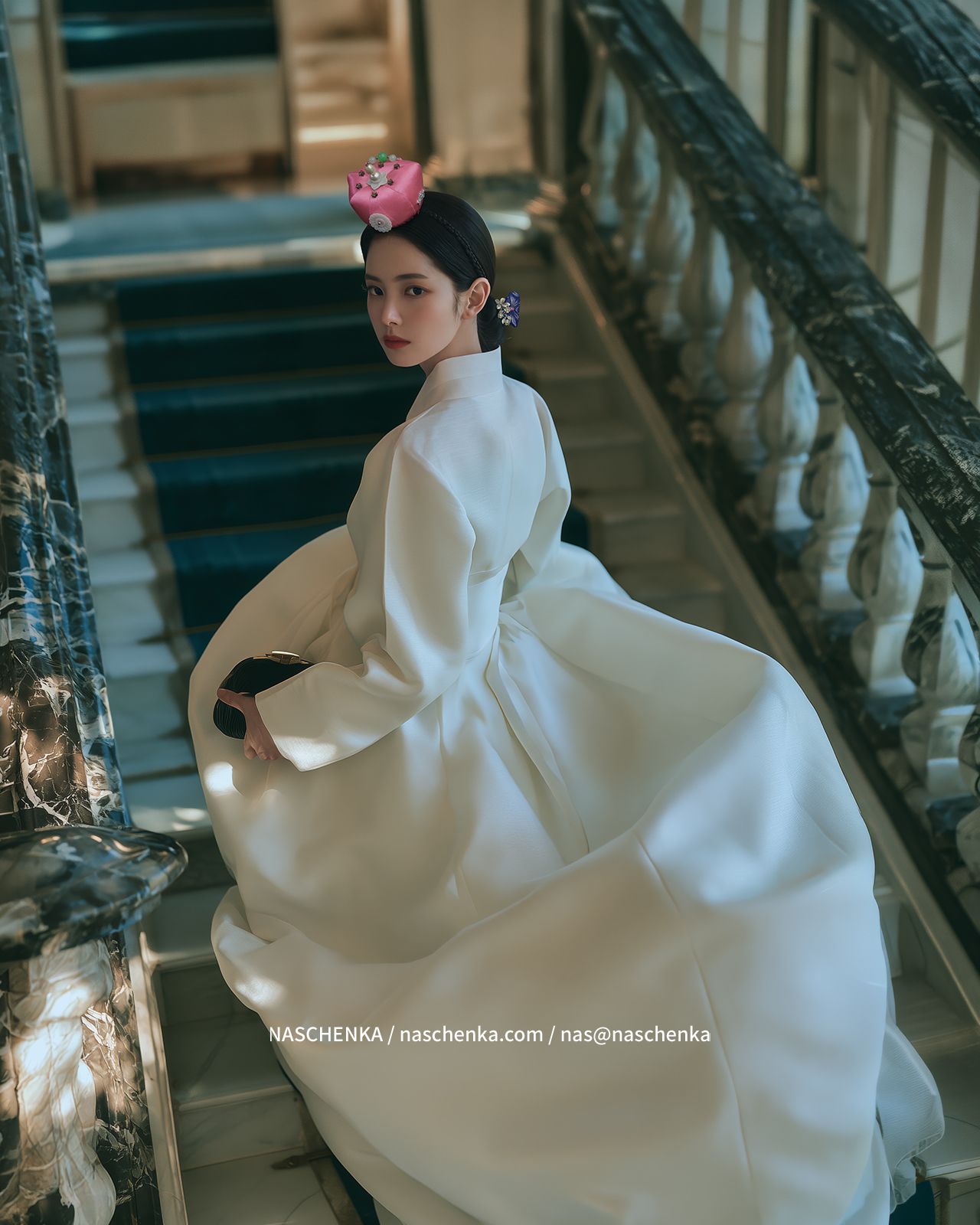
For more than two hundred years, a Korean bride has worn a jokduri. It is the crown of the wedding day.
The traditional bridal look
- Robe — the wonsam or, for the grandest weddings, the embroidered hwarot.
- Hair — parted at the center and set in a low chignon held by a long binyeo, often a phoenix binyeo.
- Crown — the decorated jokduri, with jade plate and strings of coral, amber and pearl.
- Ribbon — a long, decorated daenggi hanging behind from the binyeo.
- Face — red dots on the cheeks and forehead, yeonji and gonji, to ward off evil.
The pyebaek
At the pyebaek, held after a modern wedding, the bride and groom bow to the groom's family, who offer blessings and throw dates and chestnuts for the couple to catch — a wish for children. The bride wears hanbok and a jokduri or hwagwan. For many couples today, this is the moment the jokduri is worn.
Choosing a jokduri
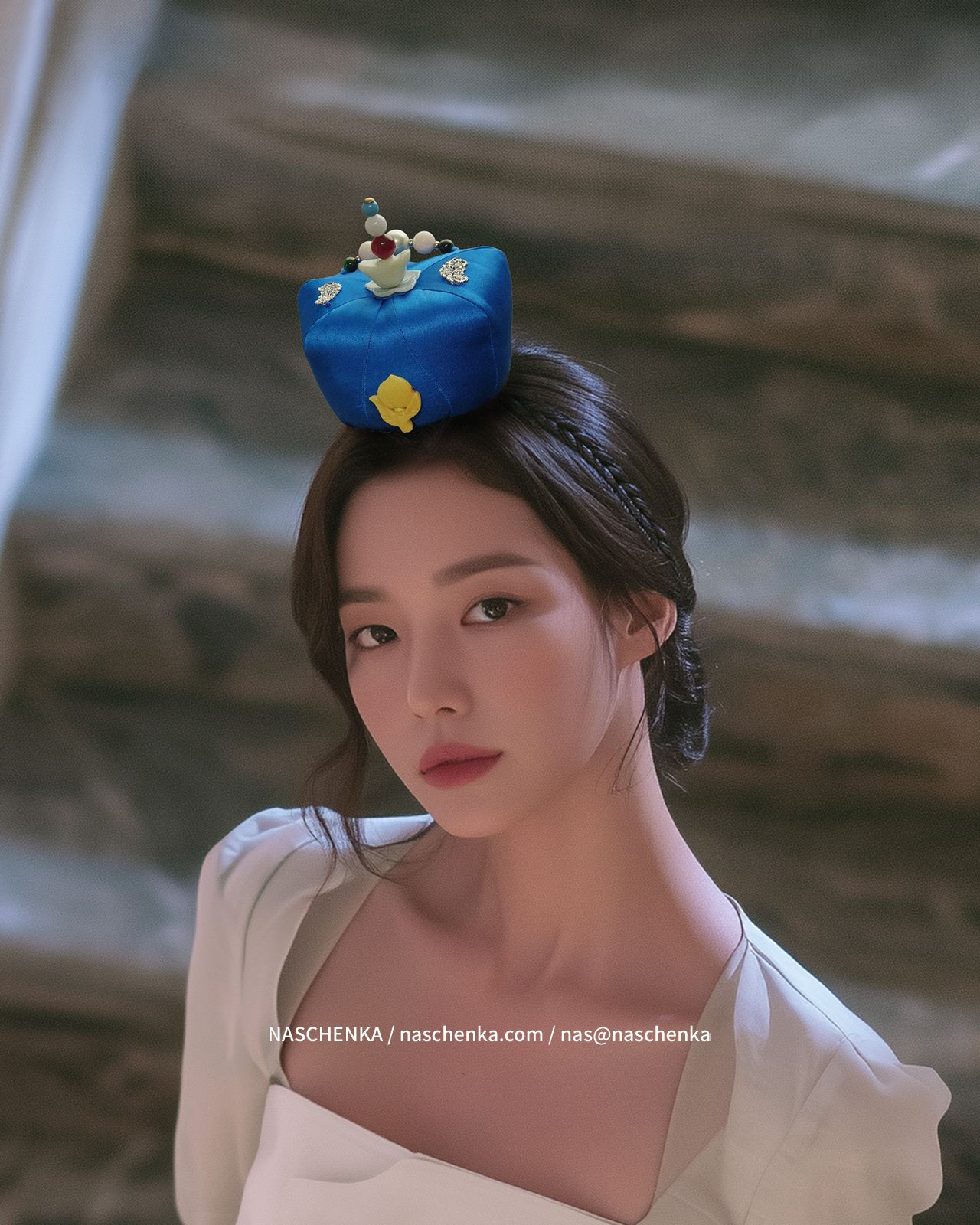
- Color — black is classic and goes with everything; blue and pink suit lighter hanbok.
- Ornament — for a wedding, a decorated jokduri. Jade, pearl, coral and amber carry the old blessings of peace, purity, protection and long life.
- Scale — the jokduri should suit the face and the chignon. Small and precise reads more elegant than large.
- With — a binyeo through the chignon; a cheopji at the parting for a court look; a norigae on the skirt.
Renting a jokduri
NASCHENKA offers jokduri rental to visitors of its Seocho store in Seoul, by appointment. Rental terms differ by piece. Ask through the KakaoTalk channel “나스첸카”.